

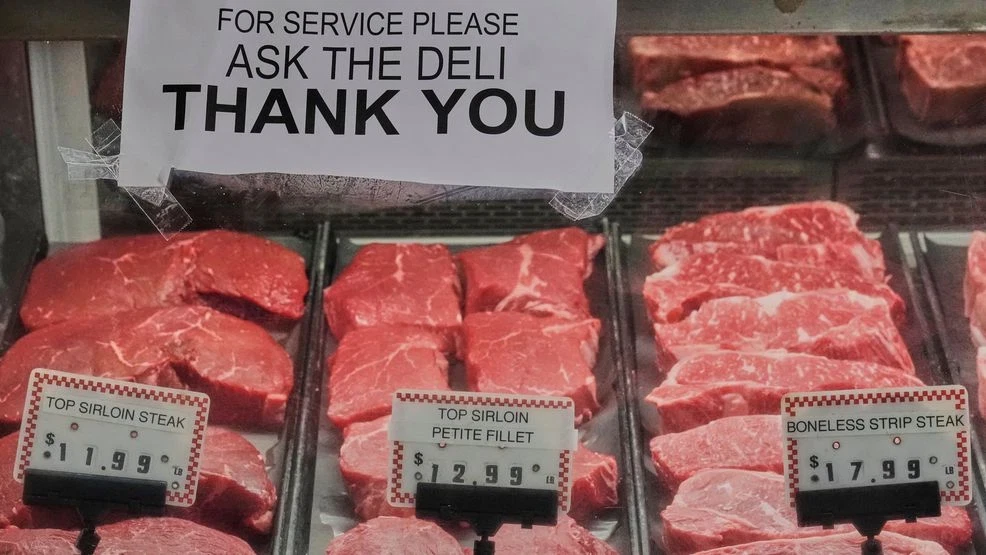
(WASHINGTON, D.C.) - Grocery inflation has eased from its recent peak, but shoppers are still feeling sticker shock in key aisles -- especially when buying beef, coffee, and produce.
The latest federal data shows prices for beef and veal rose between 11 and 25 percent from November 2024 to November 2025, depending on the cut. Chuck roast, round roast, and stew beef posted the largest year-over-year increases, climbing faster than staples like milk, bread, and chicken.
Coffee prices also surged, jumping roughly 35 percent over the past year. In response, the Trump administration recently announced plans to reduce tariffs on imported beef and coffee in an effort to ease consumer prices. Economists caution, however, that long-term issues such as drought and supply constraints could keep beef prices elevated for several more years.
Produce prices continue to trend higher as well. Iceberg lettuce costs more than 20 percent more than it did a year ago, while romaine lettuce is up 12 percent. Banana prices climbed about 7 percent, and orange juice now costs roughly 12 percent more. Shoppers are also paying more in the snack aisle, with cookie prices up about 8 percent.
Assessing the full scope of inflation remains difficult. The Bureau of Labor Statistics reported overall inflation at 2.7 percent in its most recent release, but economists warn the data may be distorted due to reporting delays caused by the government shutdown.
Many economists expect a clearer picture of inflation once December data is released next month.
Meanwhile, a recent survey from the AP-NORC Center for Public Affairs Research found that most U.S. adults say they have noticed higher-than-usual prices for groceries, electricity, and holiday gifts in recent months